Introduction
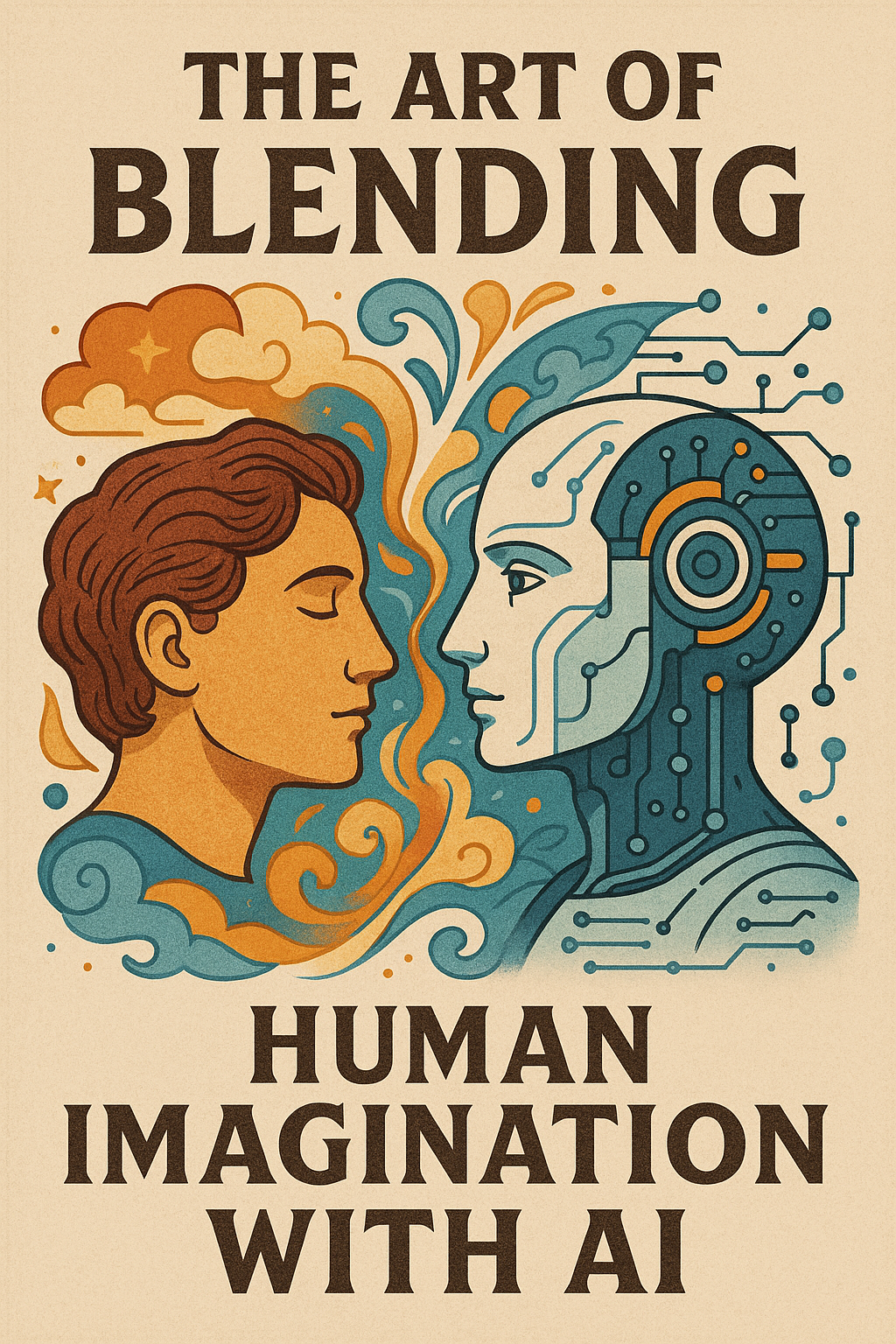
Artificial Intelligence has become one of the most transformative creative tools of our time. For artists, photographers, and storytellers, it’s not just a piece of technology — it’s a new kind of brush, a creative partner that helps expand imagination beyond traditional limits.
But while AI can generate images in seconds, it still depends on the human mind to bring meaning, emotion, and story to those creations.
AI as a Creative Partner
AI tools like MidJourney, Leonardo AI, and DALL·E 3 have revolutionized the way we create.
They can visualize complex ideas instantly, allowing artists to explore new styles, concepts, and compositions faster than ever before.
However, true creativity comes from guiding these tools — not just using them.
Crafting the right prompt is like composing music: it requires rhythm, structure, and emotion.
A single word can change the lighting of a scene, the mood of a portrait, or the symbolism of a story.
When I create with AI, I don’t see the model as a generator but as a collaborator. I direct it, experiment, and refine — blending its precision with my own artistic instincts.
Where Human Touch Still Matters
Even with incredible algorithms, AI lacks human context.
It doesn’t understand nostalgia, irony, or why a small imperfection can make an image beautiful.
That’s where the artist’s intuition becomes irreplaceable.
Once I generate an AI-based image, I often bring it into Photoshop, Lightroom, or Camera Raw, where I refine details, adjust tone and color, and add subtle elements that make it feel alive.
AI gives me the base, but the story and emotion come from the human hand.
Enhancing, Not Replacing
Many people fear that AI will replace artists — but I believe it’s doing the opposite.
It’s giving independent creators access to tools that once required large studios.
It allows experimentation, innovation, and personal storytelling at a scale we’ve never seen before.
The key is to find harmony between both worlds:
- AI for ideation and speed,
- Human creativity for emotion and purpose.
A New Creative Language
Working with AI teaches us a new kind of literacy — the ability to speak in prompts, parameters, and visual metaphors.
It’s a language that sits between technology and art, where artists become translators of emotion for machines to interpret.
In a way, AI doesn’t take away creativity — it forces us to understand it better.
Conclusion
Blending human imagination with AI is not about automation — it’s about amplification.
The machine offers infinite possibilities, but it’s the human who decides what truly matters.
Art made with AI can still carry soul, depth, and narrative — as long as we remember that behind every beautiful prompt, there is a person with a vision.
Creativity is not about who makes the image, but about who dreams it first.